
Materials & Finishes
Choosing Materials for Custom Sculptures: Start with the Use, Not the Name
Choose a custom sculpture material by defining its use first: how long it will be displayed, where it will stand, how people may interact with it, and what finish you expect. Fiberglass, foam and stainless steel are design alternatives, not a universal ranking. For exhibition buyers, designers and commercial-space…
Choose a custom sculpture material by defining its use first: how long it will be displayed, where it will stand, how people may interact with it, and what finish you expect. Fiberglass, foam and stainless steel are design alternatives, not a universal ranking. For exhibition buyers, designers and commercial-space teams, a clear brief is more useful than requesting a material by name alone.
Fiberglass: specify the composite, not just the label
Fiberglass sculpture commonly means glass fibers combined with a polymer resin. FRP means fiber-reinforced polymer; glass fiber is one reinforcement option. ACMA explains that composites combine a resin matrix with reinforcing fibers and that resin choices and additives influence material properties.[1]
Consider fiberglass for sculpted, painted forms, but ask what resin system, reinforcement and finish are proposed. Polyester, epoxy and other resins are not interchangeable specifications. The word “fiberglass” alone does not establish fire performance, weather resistance or service life.
Foam: review the complete proposal
Foam-based fabrication is an option to discuss for exhibition imagery and shaped display objects. “Foam” is not a complete specification either. Ask which foam is proposed, how exposed surfaces will be finished, and what handling or visitor-contact conditions the design must accommodate.
If foam is combined with another material, request a description of the assembly. Do not assume that every foam sculpture has the same internal structure or protective surface.
Stainless steel: match the finish to the site
Stainless steel offers a different visual direction when a metallic surface is central to the design. Its suitability still depends on specification and environment.
BSSA's external-building guidance considers site conditions, local microclimates, surface finish, fabrication and access for cleaning.[2] These are useful questions for a sculpture brief, not a global certification. Describe coastal exposure, pollution and sheltered areas to the project team. Agree the grade and maintenance approach rather than assuming stainless steel never corrodes.
3D printing is a method, not a material
A request for a “3D-printed sculpture” describes a production method, not the substance of the finished object. Ask which printing material is proposed and how printed components will be assembled and finished. Keep those questions separate from the intended appearance and use. A digital model or printed sample does not, by itself, establish the suitability of the final installation.
A real example: exhibition identity in three dimensions
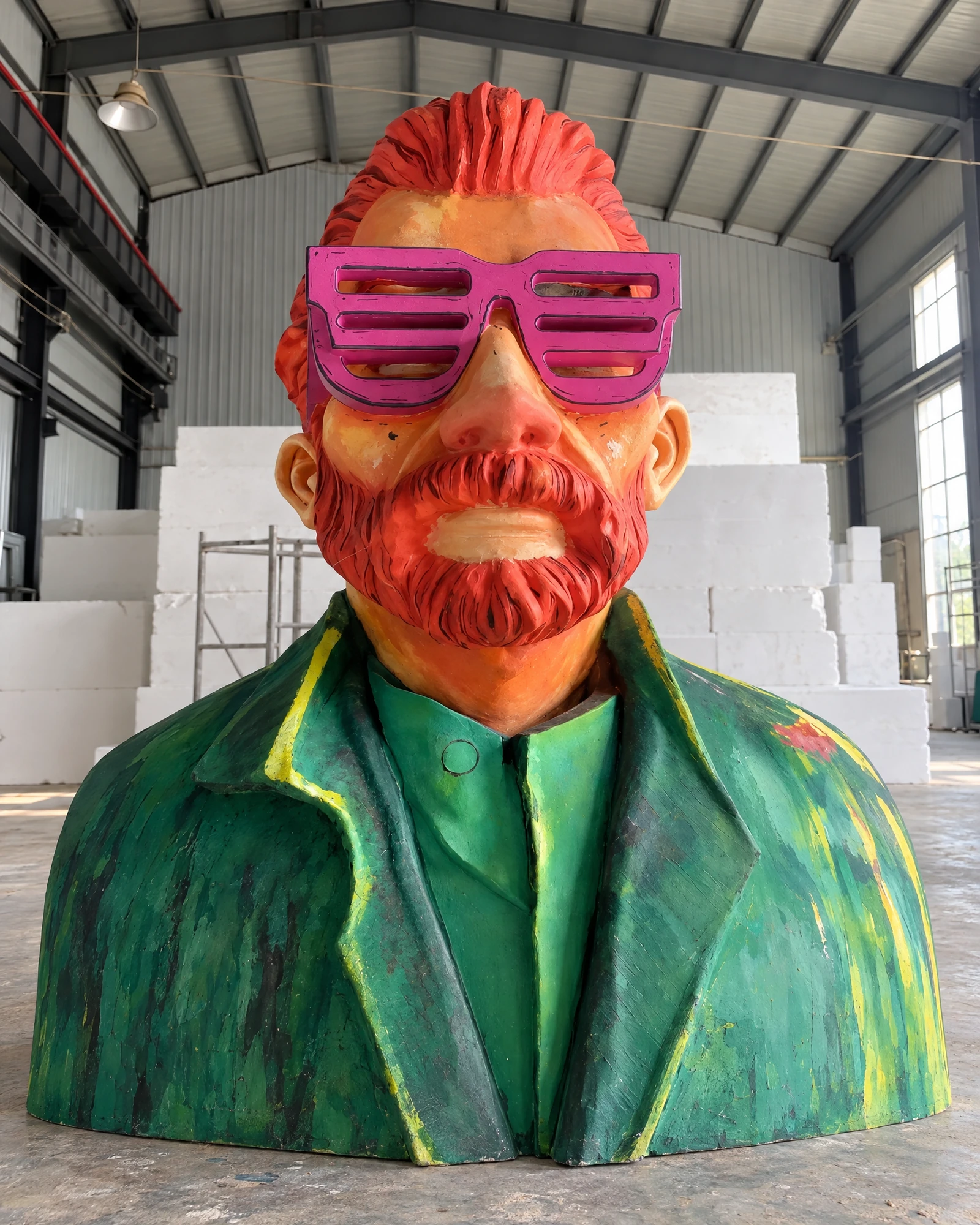
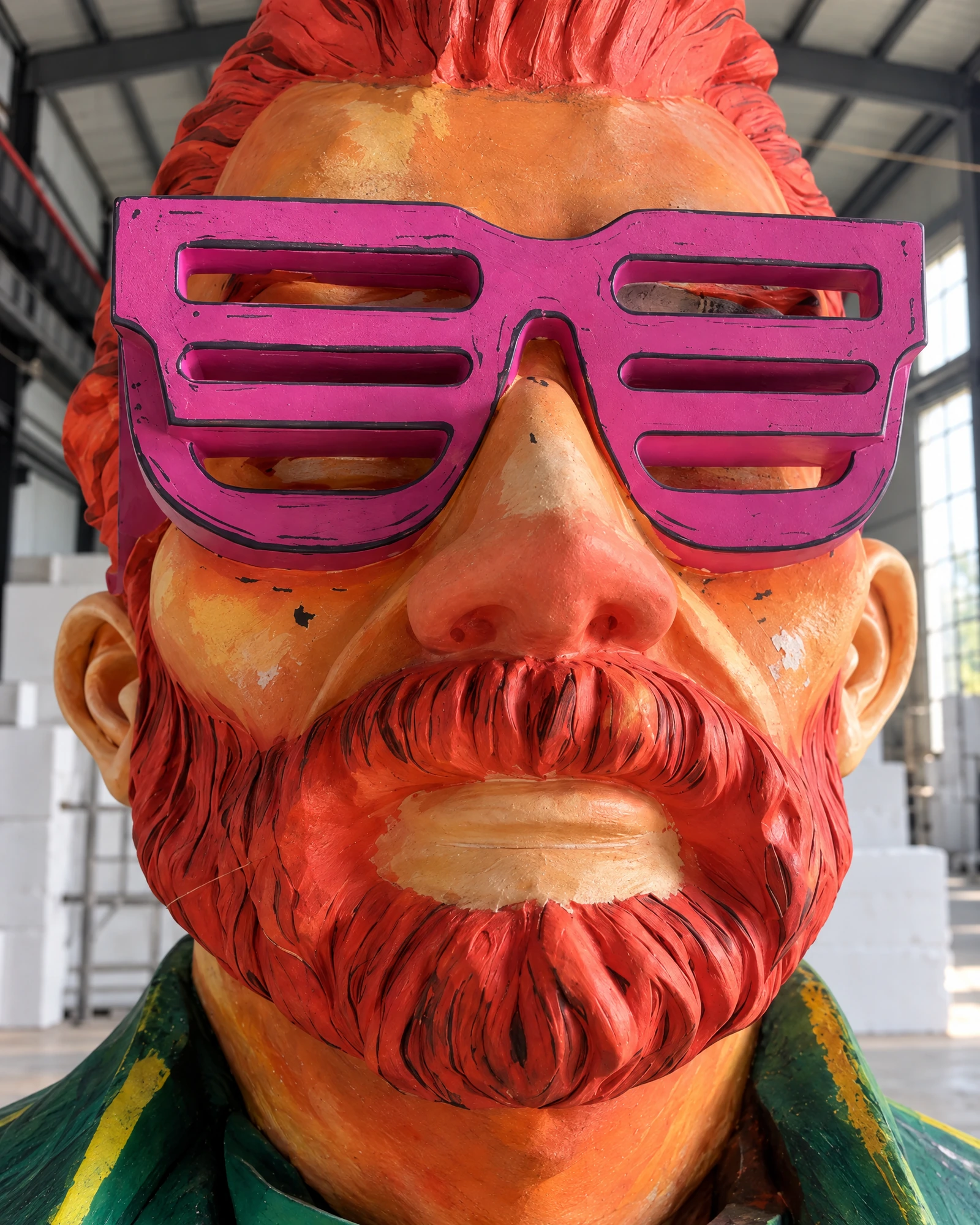
Nexaform's monumental portrait sculpture uses foam and fiberglass to create a signature visual for a contemporary art exhibition. Its red hair and beard, magenta shutter-style glasses and green jacket illustrate why shape and color should be part of the material discussion. The confirmed material combination does not establish a particular core-and-shell construction.

Treat finishing as part of selection
Ask for a finish reference or sample showing the intended color, gloss and texture. Clarify acceptable visible joints and surface variation. Compare proposals against the same finish expectations, not just the material names.
A practical checklist before requesting a proposal
- Display period: Temporary event, recurring exhibition or ongoing installation?
- Contact and access: Can visitors touch it, and how will staff reach it for cleaning?
- Site environment: Indoors, sheltered or exposed? Describe moisture, sunlight, salt and pollution.
- Finish expectations: Provide color, texture and gloss references.
- Mounting: Identify the base, fixing location and installation access for technical review.
- Regulatory review: Ask the project team to assess applicable local fire, structural and public-safety requirements.
Material selection is a project decision, not a lifetime guarantee. If you are preparing a brief, share your references and site information with Nexaform on WhatsApp to discuss what needs evaluating.
References
Your project, in context
Ready to discuss your space?
Share your project brief or reference images with our team. We will help identify the next practical step.
Discuss your project on WhatsApp ↗Continue exploring